
Showing posts with label Investment Guide. Show all posts

Saturday, 16 November 2024

SIP vs Stocks, FDs, ULIPs, and More: Discover Smarter Investment Choices


Discover Smarter Investing Strategies!"
Confused between SIPs, Stocks, FDs, ULIPs, or Lumpsum? This guide has the answers!

📘 From the book: Demystifying SIPs for Financial Freedom
Unlock deeper insights and practical strategies

get your copy now on Amazon!

  • Download Our Free PDF: Your Handy Guide to SIP Comparisons!

    This blog is available as a PDF Read, share, and explore smarter investing with our PDF

SIPs vs Other Investment Options: Which One Fits Your Goals?


1. Introduction

With 40 years of experience and insights from over 300 investors, I've witnessed the highs and lows of various investment strategies. Many investors struggle to decide between SIPs, Stocks, FDs, and other options. If you're wondering which is right for you, let me guide you with practical examples and clear comparisons.


2. SIP vs. Mutual Funds

A common misconception is that SIPs and Mutual Funds are separate. Think of a mutual fund as the bus and a SIP as your monthly ticket to board it. While lump-sum investments buy you the whole bus, SIPs allow you to invest gradually. Many say, “I want SIP, not Mutual Funds,” but SIPs are simply a systematic way to invest in mutual funds.

Watch Video | Read Blog | Download PDF


3. SIP vs. Lump Sum

For salaried individuals, SIPs are an easy way to invest monthly, while business owners or professionals with irregular incomes often hesitate. For example, a doctor I know was hesitant to sign up for SIPs due to income variability. SIPs bring discipline, while lump-sum investments require timing the market, which is harder to predict.

Watch Video | Read Blog | Download PDF.


4. SIP vs. Fixed Deposits (FDs)

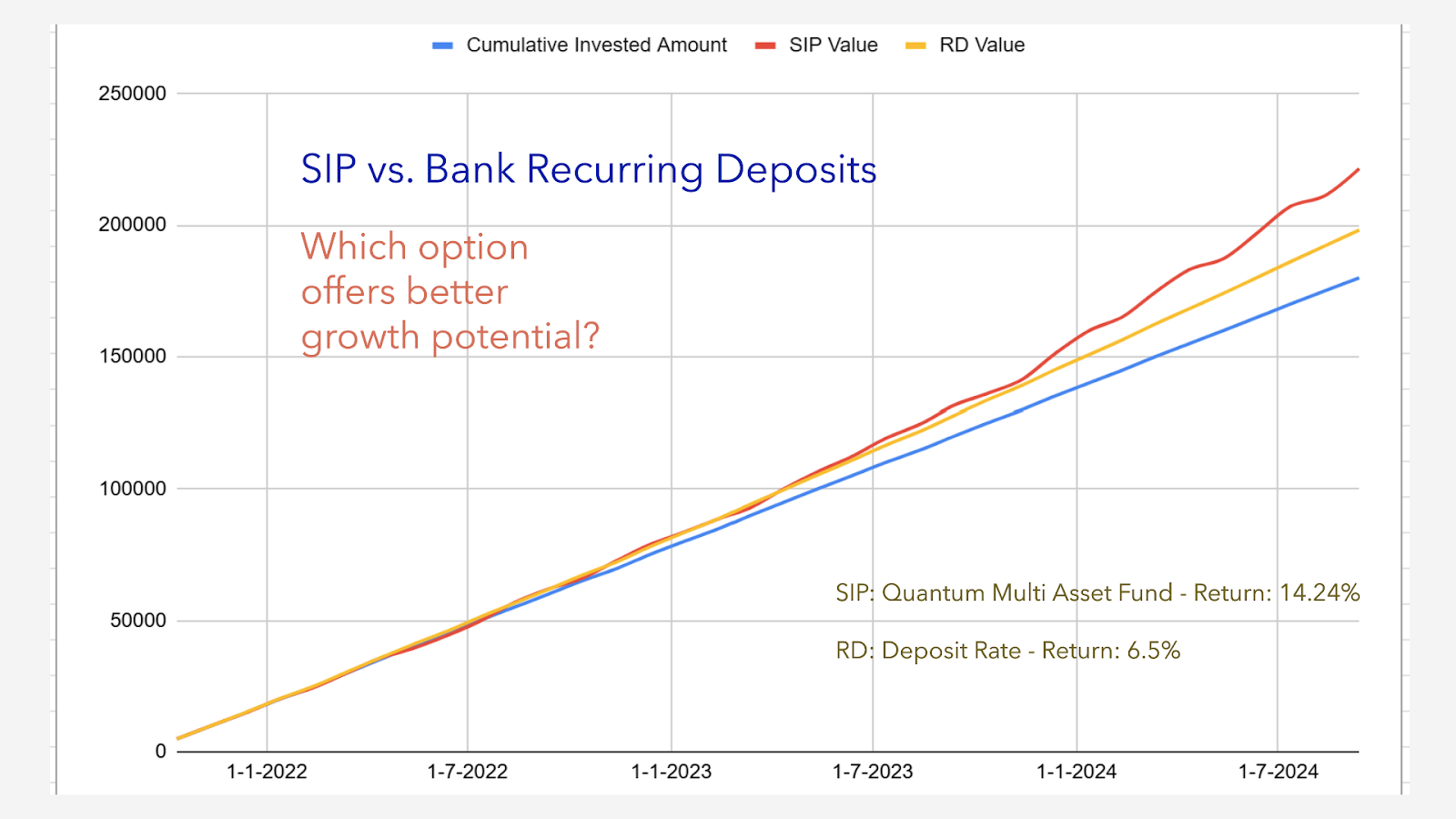
FDs are often seen as a "safe" option, with over 50% of Indian households preferring them. But are they truly risk-free? Inflation and tax erosion can shrink returns. On the other hand, SIPs in equity mutual funds have historically outperformed FDs over long durations.

Check out the graph comparing SIP and FD returns 
Watch Video | Read Blog | Download PDF.


5. SIP vs. Stocks

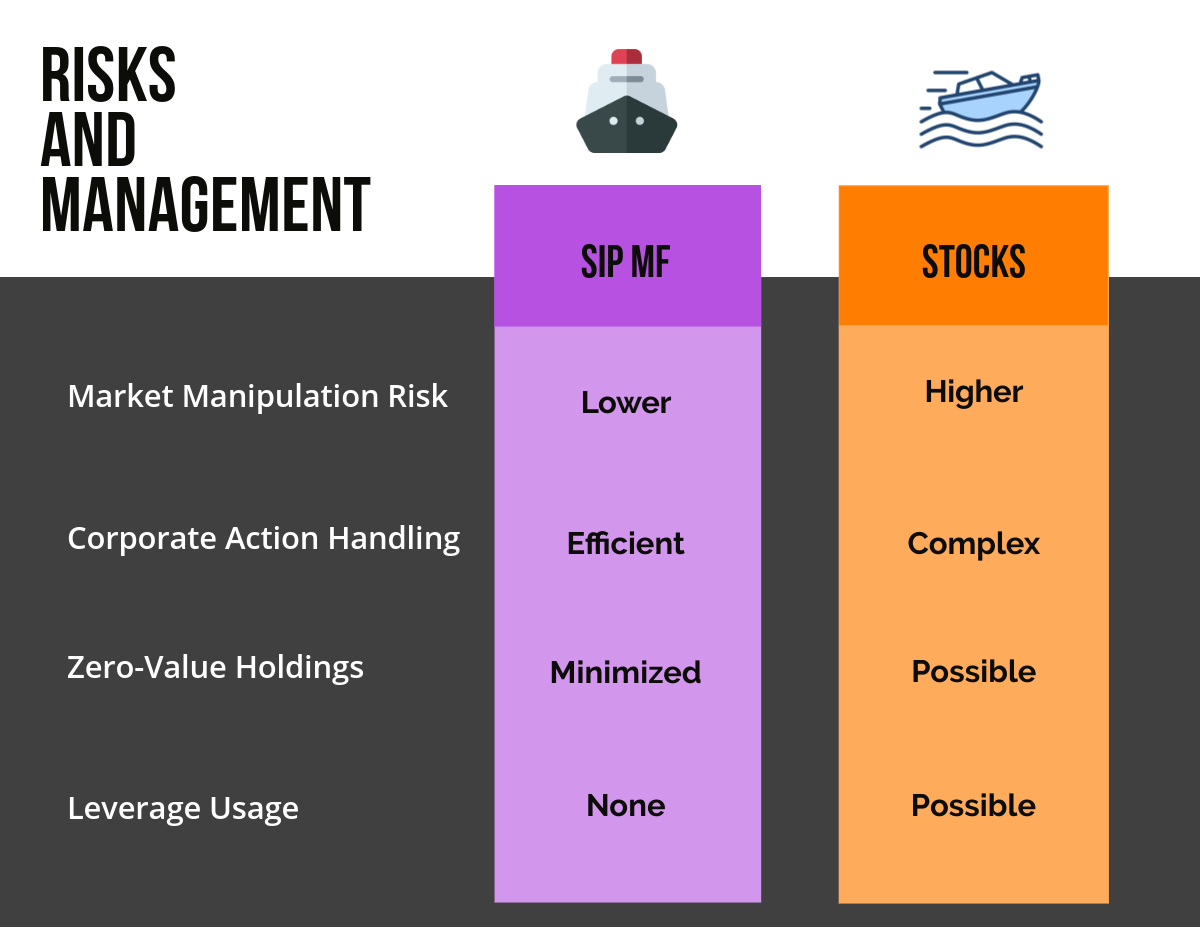
The stock market is exciting but volatile. More people are opening demat accounts and trading heavily, but risks abound. For instance, many investors misunderstand bonus issues, thinking a 1:1 bonus doubles their investment overnight, when it simply splits the share price. Unlike SIPs, which are like steady ships, stocks can behave like speed boats—fast but risky.

Compare SIP and stock in our table 
Watch Video | Read Blog | Download PDF


6. SIP vs. ULIPs

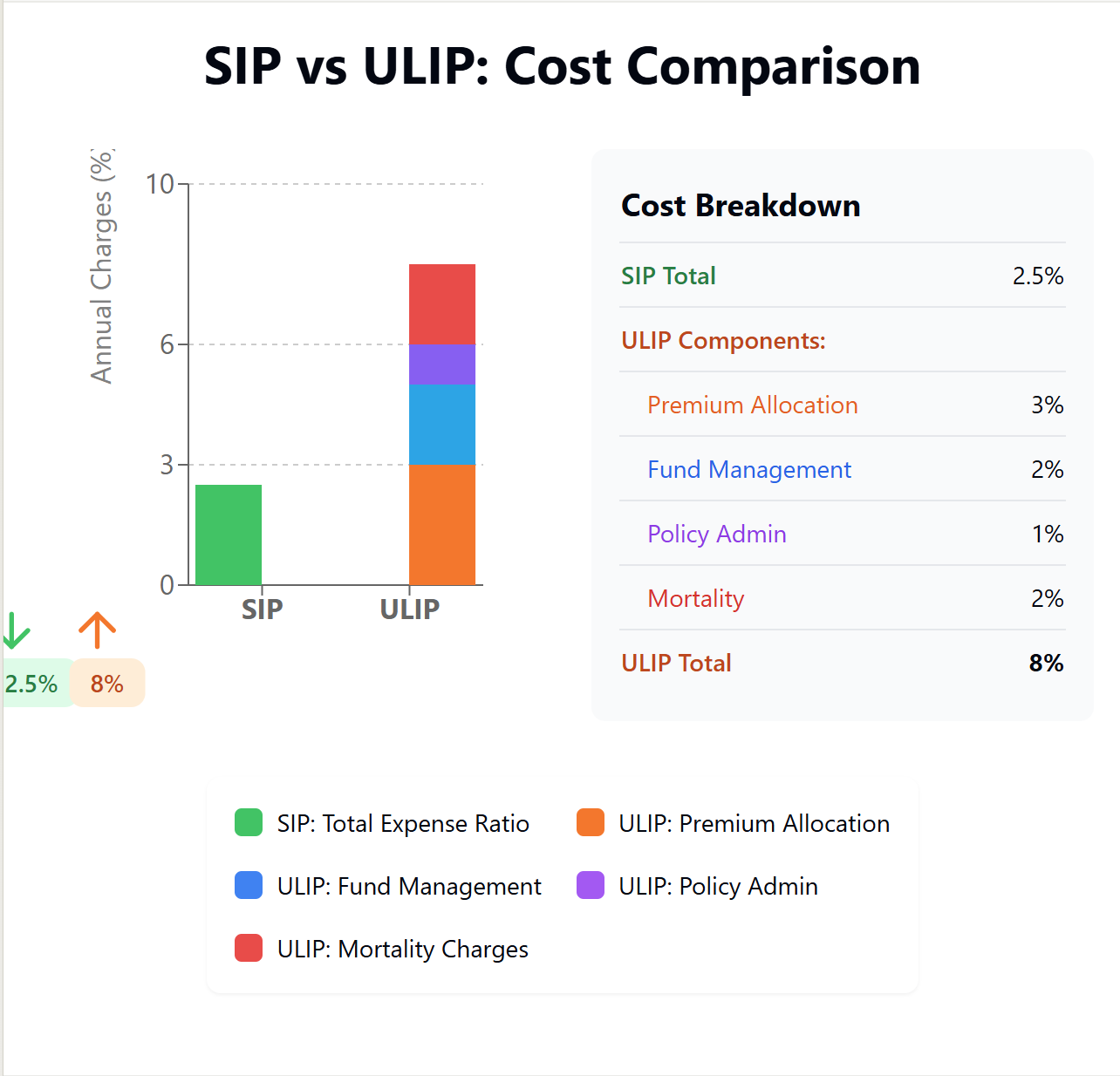
ULIPs often lure investors with marketing gimmicks, but they combine insurance with investments, making costs and returns unclear. A recent Outlook article (Nov 2024) highlighted how mutual funds are a better option for child welfare compared to ULIPs. SIPs are a straightforward path to wealth, while ULIPs resemble a complex maze.

Review cost comparisons in our bar graph 
Watch Video | Read Blog | Download PDF


7. Summary: Key Takeaways

  • SIPs provide consistency and discipline, making them suitable for all income groups.

  • FDs are relatively safe but risk inflation erosion.

  • Stocks are high-risk, high-reward options that require skill and knowledge.

  • ULIPs often lack transparency and are less cost-effective than SIPs.

  • Mutual Funds and SIPs go hand in hand for steady, long-term growth.


8. Call to Action (CTA)

  • Watch our YouTube videos: Dive into each comparison in detail with our playlist.

  • Download our free PDF: A handy guide to SIP comparisons is just a click away.

  • Buy our book: Demystifying SIPs for Financial Freedom explains these concepts in depth—get it here.

  • Consult with us: Ready to strategize your investments? Let’s connect—sign up here.

Remember, smart investing is about making informed decisions. Start your journey today!

Disclaimer: The information presented in this article is for educational purposes only and does not constitute financial advice. While data has been sourced using AI chatbots and publicly available information, ULIP and mutual fund scheme charges can vary significantly. The figures used are illustrative and intended to help explain the concepts involved. All market-linked investments are subject to market risk. Past performance is not indicative of future results.


Connect with Us

Kannan M

Consultant 

"Unbiased Quality Advice"


Social Media


Subscribe to our Youtube channel 

Blog - https://radhaconsultancy.blogspot.com/

LinkedIn : Connect with me on LinkedIn to learn more about my professional journey and insights.

FB Radha consultancy Page: Follow Radha Consultancy for updates on financial strategies and tips.

X Twitter : @KannanM1960 :  Join the conversation on Twitter! Let's discuss finance, ebooks, and more.

Instagram : kannanm1994 : Get a glimpse into my world and the inspiration behind my writing.


Beyond Risky Equities and Snail-like Debt:

The Hybrid Recipe for Success


Experience the future of reading with my ebook!

Get it, Read it, Share it!


Thursday, 21 September 2023

Choosing the Right Mutual Fund: A Comprehensive Guide

Choosing the Right Hue in the Spectrum of Mutual Funds: Unravel the Mystery with Our Guide


Investing in mutual funds can be a daunting task, especially with the plethora of options available in the market. This blog post aims to simplify the process by providing a step-by-step guide on how to choose the right mutual fund for your investment needs.

Fund Investment Selection

The first step in choosing a mutual fund is understanding the fund's investment objective. This includes understanding the fund's expense ratio, standard deviation, alpha, and beta. These parameters provide insights into the fund's performance, risk, and cost.

Investment Returns: The Story Behind the Numbers

Investment returns are a crucial factor in selecting a mutual fund. Understanding concepts like Time Value of Money and different methods of calculating investment returns such as Absolute Return, Simple Annual Return, Compound Annual Growth Rate (CAGR), Internal Rate of Return (IRR), and Extended Internal Rate of Return (XIRR) can help investors make informed decisions.

Risk-Adjusted Returns

Risk-adjusted returns are another important factor to consider while choosing a mutual fund. It helps investors understand how much risk is involved in achieving a certain level of return.

28 Important Parameters for Selection

There are 28 important parameters that investors should consider while selecting a mutual fund. These parameters are divided into primary and secondary parameters. The primary parameters include investment objective, risk tolerance, diversified investment, performance history and expense ratio among others. The secondary parameters are further divided into six groups including company background, fund's investment style, measures, market conditions, tax efficiency and other factors.

Tables for Better Understanding

The chapter includes 13 tables that provide a detailed understanding of various concepts and parameters. These tables cover topics like compound interest, CAGR, IRR, XIRR, Risko meter sections, comparison of different small cap funds and more.

This blog post is based on Chapter 8 of our detailed Tamil book on mutual funds which includes risk profiling. It is the most detailed chapter for selecting.

mutual funds with a total of 43 pages and 13 tables covering 28 parameters for selection.

For those interested in learning more about mutual funds, we are offering a free pre-read booklet in PDF format in Tamil. This booklet provides a sneak peek into our comprehensive guide on choosing mutual funds. Reach out to us to get your free copy today! Even if you don't read or understand Tamil, no problem, reach us we will help you in English. For reaching us, in the contact us form, give your email id and mobile, we will send you the pre read detailed booklet link or we will help you to choose mutual funds in English conversation.

Remember, choosing the right mutual fund is not just about looking at past performance. It involves understanding your financial goals, risk tolerance and various other factors. So take your time, do your research and make an informed decision.

Happy investing!

Please note: This blog post is intended to provide general information and understanding of mutual funds. Reach us for making better investment decisions.

Read More

To read the other Seven chapters in English of the proposed book in mutual funds using the following links

Chapter 1 - What is Mutual funds.

Chapter 2 - Why Mutual funds

Chapter 3 - Understanding Mutual Fund Categories

Chapter 4 - Equity funds

Chapter 5 - Debt Funds

Chapter 6 - Hybrid Funds

Chapter 7 - Goal based investments /FOF /ETF

Contact us to get the actual book previews in Tamil, all contents free without any locks!

For reaching us, in the contact us form, give your email id and mobile, we will send you the pre read detailed booklet link.

Similar reads

Understanding Investment Returns: Unveiling the Tr…

Maximize Your Returns with the Right Mutual Funds


SIP

SIP vs Lump Sum


#MutualFunds #InvestmentGuide #FinancialPlanning #AssetManagement #PortfolioDiversification